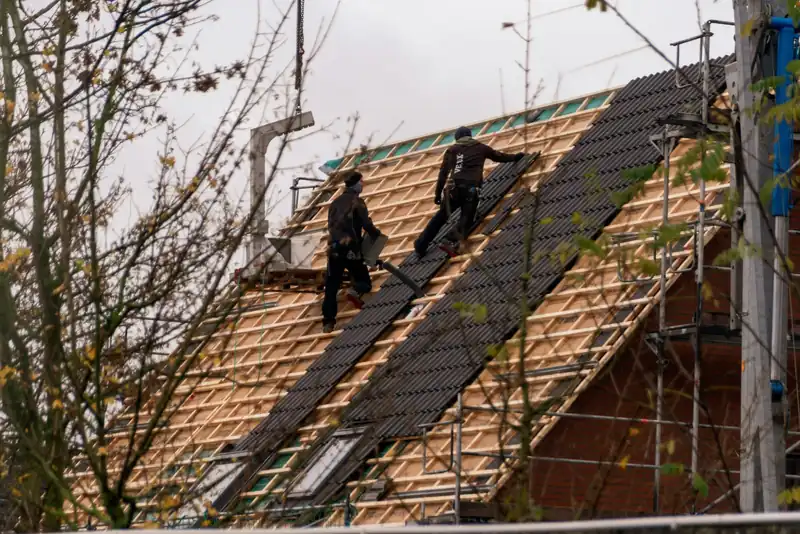
A roofing company website should show what you do, where you work, real photos of your jobs, an easy way to ask for an estimate, and the license number your state requires in advertising. Roofers and electricians also have rules about what their ads can say, so getting the wording right matters as much as the design.
Do I need to show my license number on my website?
In many states, yes, and a website usually counts as an ad. A few official examples:
- Florida: State law says a contractor's license number "shall appear in each offer of services, business proposal, bid, contract, or advertisement, regardless of medium" (Florida Statutes 489.119). Homeowners are told to check licenses at MyFloridaLicense.com.
- California: The Contractors State License Board says advertising includes "any website or post that solicits business on the Internet," and that licensed contractors must put their license number on all forms of advertising (CSLB advertising guidelines).
- Texas electricians: The Texas Department of Licensing and Regulation lists "failed to include contractor name and license number in advertising" as a violation (TDLR electrician sanctions). Customers can look up the license on TDLR's site.
Rules differ by state and trade. Look up your state's contractor or electrical licensing board and follow its advertising rules. Put the license number in the footer so it appears on every page.
What can my website say about bonding and my trade?
California has two rules that catch people out. The same CSLB guidelines say you cannot advertise work outside your license classification. The board's example is that a masonry contractor cannot advertise electrical work unless they also hold a C-10 Electrical license. The same guide says the law prevents you from saying in ads that you are bonded.
So if you are a roofer, do not list electrical or solar work unless you hold that license. If you are an electrician, do not list roofing. Check your own state's version of these rules before you write "licensed, bonded and insured."
What can a roofing website say about storms and insurance claims?
This is where roofing sites get into the most trouble.
Texas. The Texas Department of Insurance says a roofer cannot act as a public adjuster on a job it is also doing, and cannot advertise that it will (TDI: Roofing and insurance). It tells contractors to make sure their websites do not say or imply this. Examples of problem wording include offering to negotiate a claim, promising to recover "every dime you are owed," and claiming to represent the policyholder. TDI also says it is illegal in Texas to offer to waive, rebate or absorb a deductible.
Florida. Under Florida Statutes 489.147, any written or electronic ad that encourages a homeowner to make a roof damage claim must say three things in at least 12 point type. The homeowner pays the deductible. Waiving or rebating a deductible is a felony. Filing a false claim is a felony. The same law bans offering gifts, cash or a deductible waiver in exchange for a roof inspection or a claim, and allows fines of up to $10,000 per violation.
A safe approach for any state: describe storm repair as a service, explain that you can document damage with photos, and tell homeowners to contact their insurance company about coverage.
How do I show homeowners I am not a storm chaser?
After a storm, homeowners are warned about out of town crews. The Texas Attorney General's disaster scams page tells people to get more than one estimate, get everything in writing, ask for proof of insurance, and be wary of door to door sellers. It also says a notice of cancellation giving three business days to change their mind must be included if the sale happens at their home.
Your website can answer those worries before anyone asks:
- Your business address or the towns you have served for years.
- Your license number and how to look it up.
- A note that you provide written estimates and contracts.
- A note that you carry insurance and will share proof on request, if that is true.
- Reviews from local customers, with the town named.
What photos should a roofing website have?
Use real photos of your own work, not stock images. Before and after shots of the same roof are the most convincing. Add a short caption with the town, roof type and what was done, without naming the homeowner unless they agree.
Use the same photos on your Google Business Profile. Google's photo guidelines say photos should be JPG or PNG, between 10 KB and 5 MB, with a recommended size of 720 by 720 pixels.
How should I list my service area?
List the towns and counties you actually work in, in plain text. Match them to your Google Business Profile. Google lets service businesses set up to 20 service areas and says the whole area shouldn't be more than about 2 hours of driving from your base. If customers do not come to your office, Google says to remove your address from the profile and show only the service area.
How much does a roofing company website cost?
A simple site from a builder costs little. On Squarespace, the Basic plan is $25 a month, or $19 a month billed yearly, and the yearly plan includes a free domain for the first year. Wix lets you build for free, but a paid plan is needed to use your own domain. If you hire a designer, make sure the domain is registered in your name.
Keep the site short: a home page, one page per main service (repair, replacement, storm damage, or panel upgrades and rewiring for electricians), a photo gallery, a service area page and an estimate request form. Ask for name, email, address and a short description of the problem.
If you would rather not track all of this yourself, Momyntum is a $49 a month growth service that covers your website and hosting, outreach that brings in new customers, help getting found on Google and AI search, and a short weekly report by email, with a 14 day free trial and no card needed.
Questions
Do I have to put my license number on my roofing website?
In many states, yes. Florida requires a contractor's license number in every advertisement regardless of medium, and California's contractor board says any website that solicits business counts as advertising. Check your own state's licensing board.
Can my roofing website say we handle insurance claims for homeowners?
Be careful. Texas says a roofer who does the work cannot act as a public adjuster or advertise that it will, and Florida bars contractors from adjusting claims unless they hold a public adjuster license.
Can I advertise that I will cover or waive the insurance deductible?
No in Texas and Florida. Texas says it is illegal for a contractor to offer to waive, rebate or absorb a deductible, and Florida bans offering a deductible waiver in exchange for a roof inspection or claim.
Does an electrician's website need the license number too?
In Texas, yes. TDLR lists leaving the contractor name and license number off advertising as a violation. Customers can look up the license on TDLR's website.
What photos should I put on a roofing website?
Real photos of your own jobs, ideally before and after shots of the same roof. Google's photo guidelines for Business Profiles ask for JPG or PNG files between 10 KB and 5 MB, so the same files can go on both.
Updated October 31, 2026. For: Roofing, Electrical.